


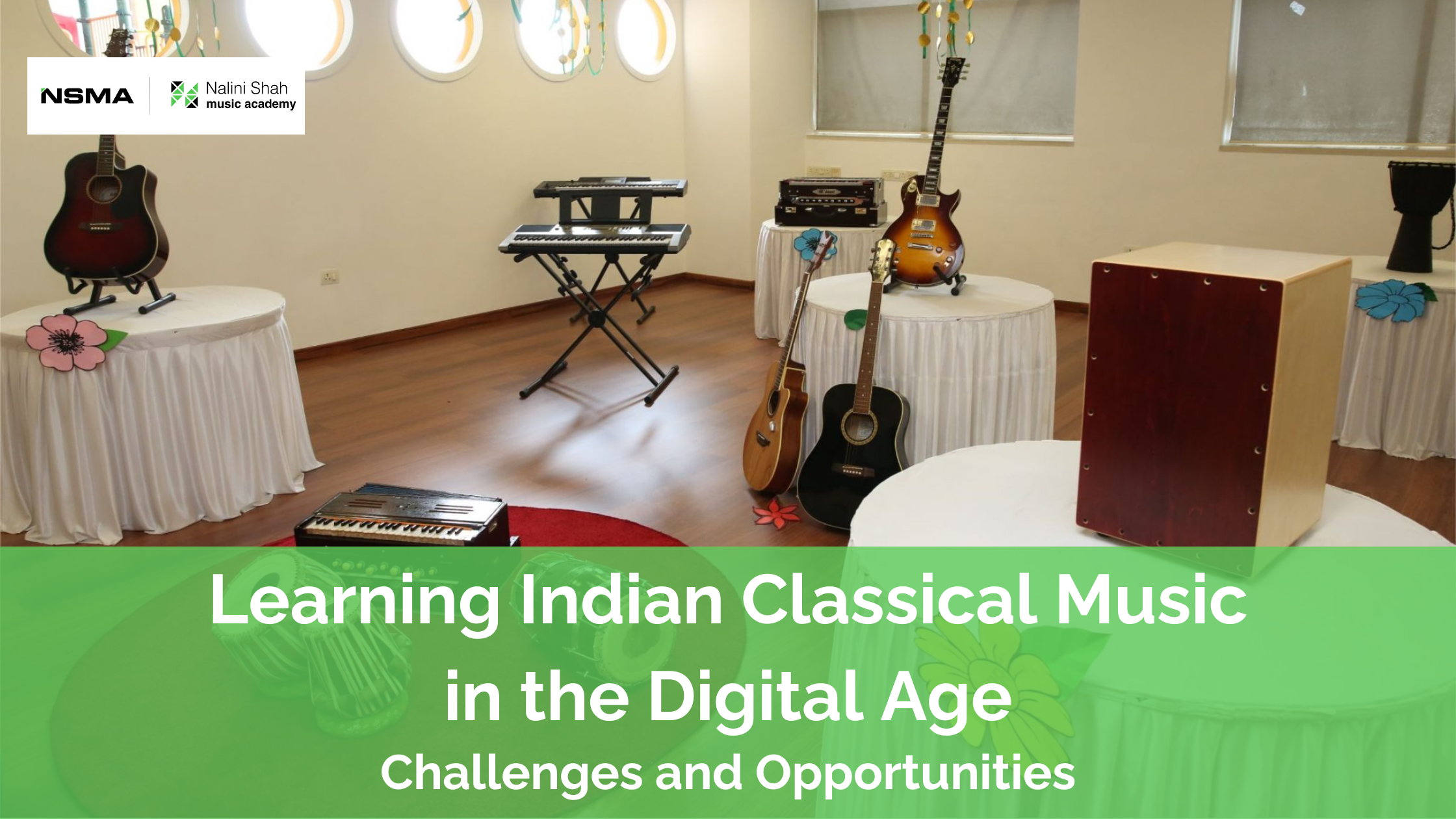
24 Apr Learning Indian Classical Music in the Digital Age: Challenges and Opportunities
Learning Indian Classical Music in the Digital Age is both easier and more confusing for students and parents. Access to online lessons, apps, and videos has increased, but finding the right guidance, discipline, and structured learning path remains a challenge. For those considering classical music courses in Mumbai, the key lies in balancing digital tools with proper training from a trusted music academy like Nalini Shah Music Academy (NSMA).
What is Learning Indian Classical Music in the Digital Age?
Learning Indian Classical Music in the Digital Age means combining traditional guru-shishya methods with modern tools such as online classes, recorded lessons, and music apps.
Students today can:
- Watch raga demonstrations online
- Practice with digital tanpura and tabla apps
- Attend virtual classes from home
At the same time, Indian classical music still depends on:
- Regular practice (riyaz)
- Personal feedback from a teacher
- Gradual progression through levels
According to the structured arts training improves discipline, memory, and creativity, which aligns strongly with classical music learning.
Challenges in Learning Indian Classical Music in the Digital Age
1. Lack of Structured Learning
Many students start with YouTube videos but struggle to progress.
Common issues:
- No clear syllabus
- Random learning of ragas
- No assessment or certification
This is where classical singing courses in Mumbai offer a clear pathway from beginner to advanced levels.
2. Limited Personal Guidance
Indian classical music requires correction at every stage.
Without a teacher:
- Notes may be inaccurate
- Voice training may be incomplete
- Students may lose confidence
A classical music school in Mumbai provides direct feedback and consistent mentoring.
3. Distractions and Inconsistency
Digital learning brings flexibility but also distractions.
Students often:
- Skip practice sessions
- Switch between multiple resources
- Lose focus over time
Parents often look for structured programs to build discipline.
4. Lack of Authenticity
Not all online content follows traditional standards.
Authentic training includes:
- Proper raga structure
- Understanding of taal
- Voice culture techniques
Institutions like NSMA maintain traditional teaching methods supported by recognized affiliations.
Opportunities in Learning Indian Classical Music in the Digital Age
1. Easy Access to Learning Tools
Students can now use:
- Tanpura apps for pitch
- Recording tools for self-evaluation
- Online resources for theory
This supports daily practice outside class.
2. Flexible Learning Options
Students in Mumbai can combine:
- Offline classes at a classical music school in Mumbai
- Online revision sessions
This hybrid model helps both school-going students and working learners.
3. Career Awareness
Learning Indian Classical Music in the Digital Age is not limited to hobby learning.
Students can explore:
- Performance opportunities
- Music teaching
- Music production and recording
Programs like diplomas and degree courses in classical music in Mumbai provide academic recognition.
How to Learn Classical Music in Mumbai?
Students and parents often ask how to start.
The most effective way is:
- Join a structured academy offering classical singing courses in Mumbai
- Follow a graded curriculum (Praveshika to Visharad and beyond)
- Practice daily with guidance
- Appear for certification exams
Nalini Shah Music Academy (NSMA) follows a step-by-step approach aligned with recognized institutions, making it easier for beginners to progress.
Why Choose Classical Music Courses in Mumbai?
Mumbai offers access to experienced teachers and recognized institutions.
Benefits include:
- Certified programs with affiliations
- Exposure to performances
- Access to both vocal and instrumental training
- Opportunities in modern music fields
For parents, enrolling children in a classical music school in Mumbai adds value beyond academics by building discipline and creativity.
How NSMA Supports Learning Indian Classical Music in the Digital Age
Nalini Shah Music Academy (NSMA) combines tradition with modern learning needs.
Students receive:
- Structured curriculum from beginner to advanced levels
- Training in vocal and instrumental music
- Exposure to both classical and light music forms
- Guidance for certifications and academic progression
NSMA also introduces students to modern courses like music production and recording, helping them connect traditional music with current industry practices.
What Parents Should Know Before Enrolling
Parents play an important role in music education.
Before choosing classical music courses in Mumbai, consider:
- Does the academy offer structured levels?
- Are the teachers experienced in classical training?
- Is there a balance between theory and practice?
- Are certifications available?
A disciplined environment helps students stay consistent and motivated.
Why Indian Classical Music Still Matters Today
Learning Indian Classical Music in the Digital Age continues to be relevant because it builds:
- Listening skills
- Focus and patience
- Emotional expression
- Cultural understanding
Research shows that music training supports cognitive development, especially in children.
Key Takeaways
- Learning Indian Classical Music in the Digital Age combines tradition with technology
- Structured learning is better than random online learning
- Classical music courses in Mumbai provide certification and guidance
- Students benefit from both discipline and creative growth
- Parents should choose academies with clear progression and experienced teachers
FAQs
What age is best to start classical music?
Yes, the best age to start classical music is between 5 and 8 years. At this stage, children can develop listening skills, pitch accuracy, and discipline more easily while adapting to structured training methods.
How to learn classical music in Mumbai?
Yes, the best way to learn classical music in Mumbai is by joining a structured academy that offers graded courses, experienced teachers, and certification programs. Regular practice and guided training help students progress steadily.
Why Indian classical music is famous?
Indian classical music is famous for its deep connection to ragas, rhythm, and emotional expression. It has a long history and is known for improving concentration, creativity, and cultural awareness across generations.
Why classical music is not popular?
No, classical music is not less valuable, but it appears less popular because it requires patience and long-term learning. Modern audiences often prefer faster forms of entertainment, while classical music focuses on depth and discipline.
No Comments